Indian Tea Industry Backs Minimum Price Proposal
· Source: Economic Times
Five tea industry groups support a proposed minimum price to cover rising costs, potentially boosting fair wage data for corporate sustainability reports.
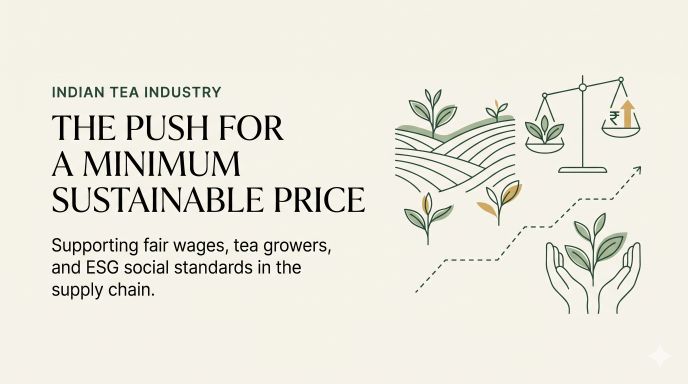
On November 11, 2026, five tea industry associations supported a new recommendation from a ten-member committee created by the Tea Board of India. The committee proposed setting a Minimum Sustainable Price (MSP) for tea. India grows roughly 1,350 to 1,400 million kilograms of tea annually, and small growers contribute about fifty-five percent of that total. Recently, the prices tea producers receive have only grown at a compound annual growth rate (CAGR) of two to three percent. Meanwhile, input costs have surged by ten to fourteen percent each year. Labour forms the biggest financial burden, accounting for sixty percent of all production costs. Producers expect these expenses to climb further when the government announces new wage rules under the upcoming Code on Wages. To help farmers survive, the committee suggested a benchmark price linked to wage movements and the Consumer Price Index (CPI), a standard measure of inflation. The industry groups have asked the Ministry of Commerce to officially approve and announce this minimum price soon.
This development could significantly affect Indian companies, Small and Medium-sized Enterprises (SMEs), and larger firms conducting Environmental, Social, and Governance (ESG) reporting. A minimum sustainable price directly tied to workers wages highlights the social pillar of ESG standards for producers and their supply chain partners. While exact rules and dates are not yet known, Indian suppliers might soon face higher purchasing costs. However, they could also benefit from more transparent and ethical supply chains. SMEs and reporting companies may want to start reviewing their sourcing contracts now to prepare for potential price adjustments. They could also use this upcoming pricing framework to improve their social compliance metrics, proving to investors that their supply chains support fair labour. By proactively adjusting their budgets and updating their sustainability reports, these businesses may turn a cost increase into a strong display of corporate responsibility.
Read the original at Economic Times
Drafted with AI help, then checked by a person against the source. How we make News
Go deeper
Is your company asked for BRSR data?
Take the one-minute check to see whether BRSR applies to you.
Check if BRSR applies