COP31 in Türkiye: Shifting the Climate Focus from Ambition to Real-World Implementation
· Source: edie
With geopolitical tensions rising, the global net-zero transition is being tested. As leaders gather for COP31, a new report shows that while ambition remains high, the true priority must now be executing credible, on-the-ground climate policies.
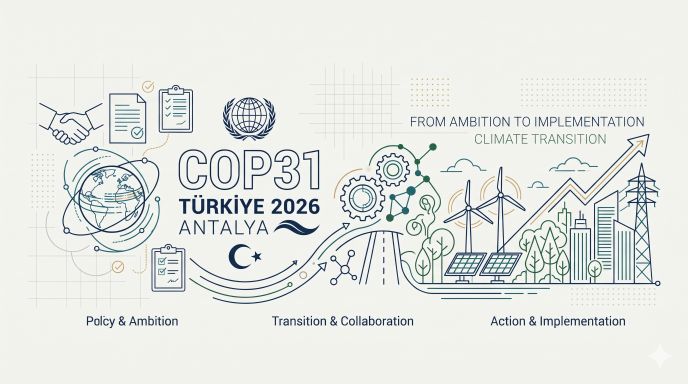
As global leaders, corporate executives, and climate advocates gather in Türkiye for COP31, they face a challenging landscape of strained public finances and intense debates around energy security. Despite fears that the net-zero movement might be losing steam, recent findings tell a different story.
According to the new report Policy Matters: Charting a Path to Net Zero—produced by the Taskforce on Net Zero Policy alongside the University of Oxford—climate ambition has actually grown across most G20 economies. The critical bottleneck, however, is implementation, with a stark divergence emerging between nations. While some countries are advancing new regulatory frameworks, others are backtracking or struggling to convert their pledges into action due to domestic economic and political hurdles.
Moving Beyond Paper Policies A uniform, one-size-fits-all approach to climate policy is no longer viable. Governments must tailor their strategies to fit their unique economic realities and energy infrastructures. Crucially, these policies must offer businesses and investors the certainty required to confidently back low-carbon initiatives.
Take corporate climate disclosure as an example. Over 40 jurisdictions globally have adopted or are rolling out ISSB climate-related disclosure standards, cementing it as a standard part of the regulatory landscape. But reporting is only a tool, not the endgame. The true value of disclosure lies in proving that a company's capital expenditures actually align with credible transition plans, ensuring that finance is actively flowing into sustainable activities rather than just looking good on paper.
The Power of Aligned Coalitions Waiting for unanimous global agreement on every detail is a luxury we cannot afford right now. Instead, groups of countries with shared interests can form "coalitions of the willing" to accelerate progress in specific areas, such as creating robust and high-integrity frameworks for carbon markets. This targeted cooperation helps raise global standards and build momentum, even when individual national pathways differ.
Closing the Emissions Gap at COP31 The math remains unforgiving. The UNEP Emissions Gap Report 2024 warns that even if all current climate commitments are fully implemented, global emissions would only drop by 11% to 15% by 2030. That falls dangerously short of the 42% reduction required to keep the 1.5°C threshold realistically within reach.
The core mission for COP31 is clear. Success in Türkiye cannot be measured solely by headline-grabbing commitments. Governments must present credible, actionable routes to delivery. The ultimate test is whether these policies are resilient enough to withstand political shifts and capable of driving the massive private investments needed to actually reach net zero.
Drafted with AI help, then checked by a person against the source. How we make News
Go deeper
Is your company asked for BRSR data?
Take the one-minute check to see whether BRSR applies to you.
Check if BRSR applies